Evidence Synthesis & Modelling
We combine rigorous evidence synthesis with agile modelling to deliver timely, fit-for-purpose insights that support smarter policy and investment.

Answering critical questions for decision-makers
Direct research questions often require answers in a timely manner; decision-makers can rarely wait for “perfect” answers. Instead, SEBI-Livestock balances a pragmatic approach with academic rigour, combining our evidence base and modelling capabilities to give fit-for-purpose support. We approach this from two angles:
- Building a background evidence base and a set of simple modelling tools to be prepared for future inquiries, and
- Reacting rapidly to specific requests to support immediate decisions. In this way, we remain agile and responsive to the evolving needs of the livestock sector.
Putting evidence at the heart of livestock decisions
Systematic evidence syntheses use standardised methodology to identify and collate findings from multiple sources. Bringing together information from a range of sources helps inform robust decision-making. SEBI-Livestock adheres to good evidence synthesis guidelines, ensuring that the evidence we use is inclusive, repeatable, rigorous, accessible, and transparent. This approach minimises bias, and highlights both the ‘gluts’ and the ‘gaps’ in an evidence base, helping to provide a ‘global vision’ of areas of knowledge.
Our approach is driven by the specific research question that needs to be answered. We have undertaken time-limited Rapid Reviews, mapped the research landscape in Systematic Maps, and used Systematic Reviews to answer focused questions. At SEBI-Livestock, we select the most appropriate evidence synthesis approach to address the question or need of the decision-maker.
The evidence base we collate serves multiple purposes. We use these evidence bases to supply input parameters for our internal modelling and for models developed by external partners. When working with publicly available data, we also aim to make our syntheses accessible to all in the form of collated datasets and interactive dashboards.
- Explore our data tools
Addressing gaps in literature
We recognize that scientific literature has gaps and biases and may be of varying quality or limited scope. The multi-disciplinary teams within SEBI-Livestock, including the research team, the data science team, and the LD4D team, collaborate to plan evidence synthesis work and collate timely, fit-for-purpose evidence.
Through our connections with the global livestock community, we design expert consultations to gather data points.
- Learn more about the Livestock Data for Decision (LD4D) Network.
SEBI-L also works with advanced informatics groups at the University of Edinburgh to explore how Machine Learning and Artificial Intelligence can facilitate and accelerate the curation of evidence to support decision-makers.
- Learn more about our Data Products and Innovations
Integrating Gender and Social Insights
Our research processes intentionally include gender-specific search terms and qualitative analysis. We recognize that robust evidence comes from combining quantitative metrics with qualitative insights on social norms. Consequently, our models increasingly incorporate sex-disaggregated data to produce gender-aware results. We utilize tools like the Women’s Empowerment in Livestock Index (WELI) and its fisheries and aquaculture counterpart (WEFI) to measure empowerment outcomes alongside productivity gains, ensuring that our interventions support equitable development.
- Learn more about SEBI-Livestock Gender Integration and Insights
Modelling
“All models are wrong, but some are useful” (George Box 1976)
SEBI-Livestock listens to decision-makers to understand their questions and challenges. When required, we use models to estimate or extrapolate data. We aim to keep models as simple as possible whilst producing a useful output. Our modelling approaches include:
- Using off-the-shelf models
- Designing specific calculations and/or models to meet requirements
- Collaborating with other groups who possess specific expertise, such as the International Food Policy Research Institute (IFPRI), Cornell University, and the Food and Agriculture Organization of the United Nations (FAO). Learn more about our Research Partnerships
Our research team
We have a highly agile service-oriented team of researchers covering an array of expertise, ready to act on decision-makers' questions and challenges. Our team’s expertise spans veterinary science, livestock production, gender, environmental impacts, economics, One Health, and food systems. We also pride ourselves on our networks and are confident that if we don’t know the answer, we’ll know who to ask.
People

Fiona Allan

Katie Dirsmith

Rose Ikwu

Ana Miranda

Phimchanok (Pim) Seelawongseree

Gareth Salmon

Karen Smyth

Johanna Wong
Products
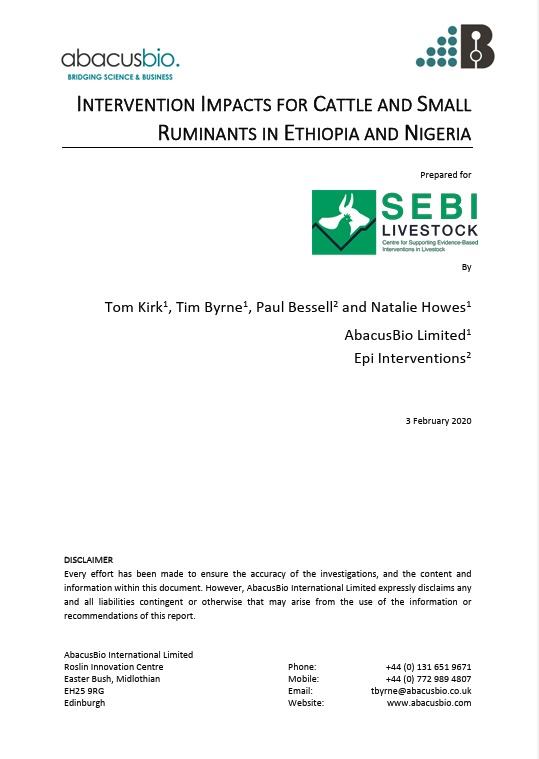
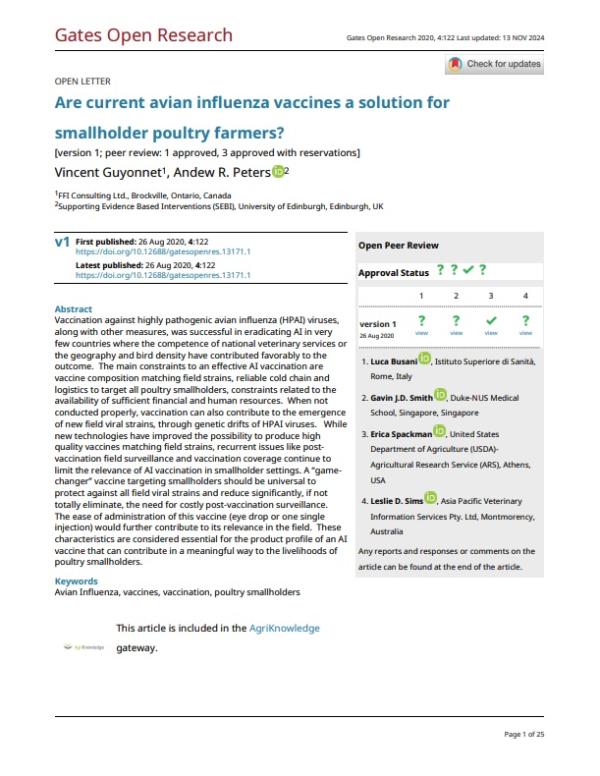
Stories
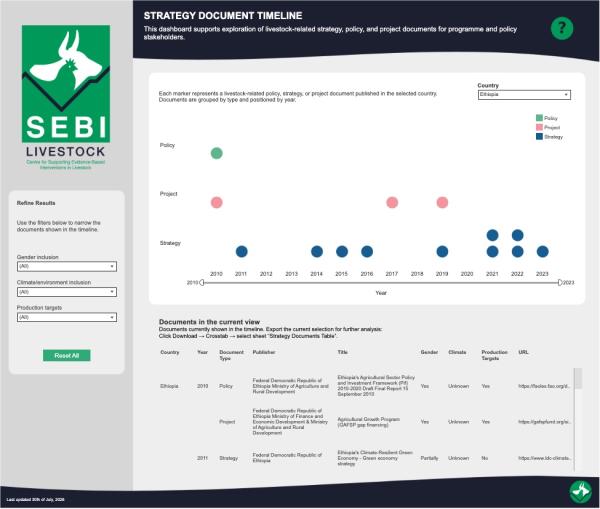
From Static Reports to Interactive Insights: Unlocking Livestock Strategy Data
Explore livestock sector priorities with our interactive Livestock Strategy Documents Dashboard.
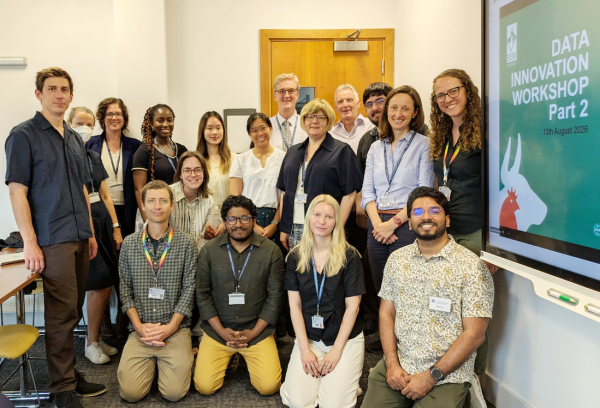
How can AI improve national livestock metrics? Insights from our latest workshop
Over the last half-year, SEBI-Livestock has been working with partners across the University of Edinburgh to explore how data science and AI can help address persistent livestock data challenges.
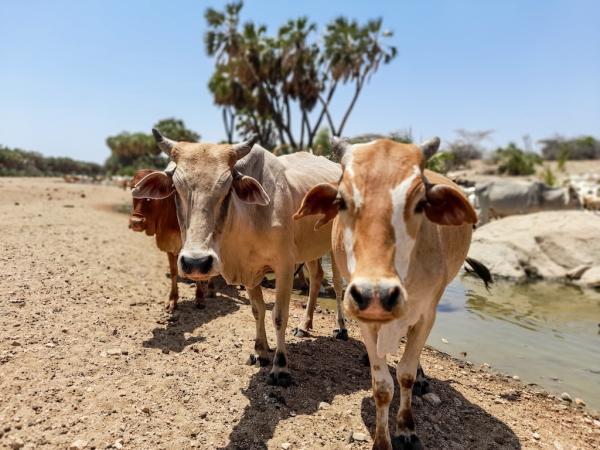
Explore evidence on cattle reproductive performance in sub-Saharan Africa
SEBI-Livestock has launched a prototype evidence synthesis dashboard that consolidates recent literature on cattle reproductive performance across nine sub-Saharan African countries.
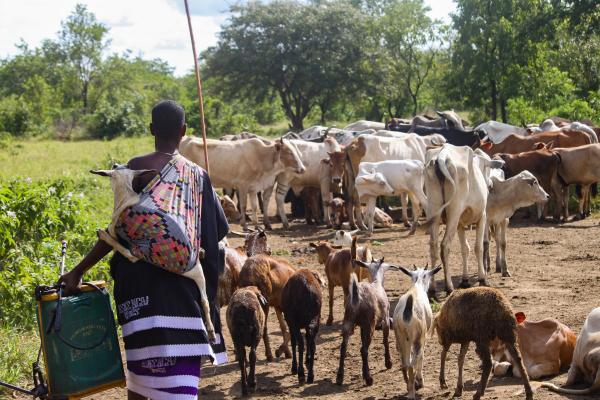
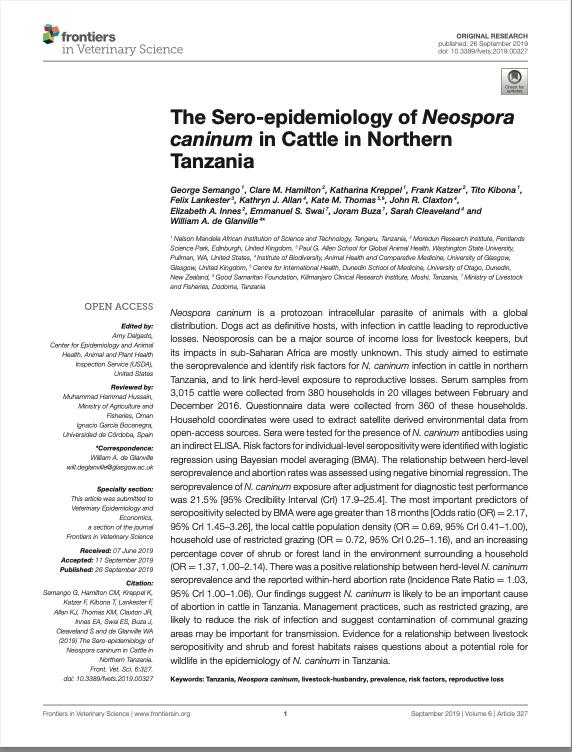
New Report Captures LD4D Member Views on Livestock Diseases
The Livestock Disease Evidence Consultation was designed to provide an opportunity to gather input from the international expert community on important data needs, gaps, and sources, to further strengthen and refine the evidence synthesis methods used to build this evidence base.
Global Experts Unite to Improve Livestock Disease Evidence for Africa and South Asia
Groundbreaking consultation brings together 130 experts from 33 countries to strengthen livestock health evidence synthesis.
Activities
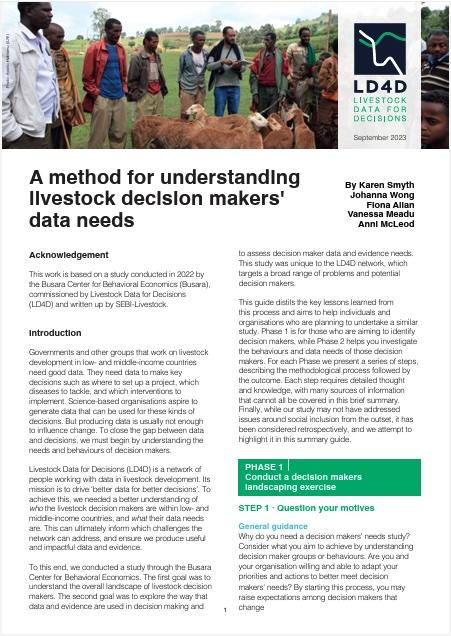
Best practice guidelines for evidence synthesis
The methodological foundation for the SEBI-Livestock evidence synthesis programme.
Explore moreLivestock Data Catalogue
SEBI-Livestock is developing a bespoke Data Catalogue to serve as a central, searchable index for livestock and aquaculture data sources.
Explore moreLivestock Disease Evidence Base for Africa and South Asia
SEBI-Livestock is improving the evidence base for 12 livestock diseases and disease groups in Africa and South Asia.
Explore moreLitXpress - supporting systematic reviews through automation
By automating the laborious task of searching literature, LitXpress frees up researchers to spend more time analysing results. This acceleration ensures that fit-for-purpose evidence can reach decision makers faster, supporting better policies and investments in animal health and production.
Explore moreExplore other Areas of Work
Image



Image